The forecast on your phone says twelve knots and sunshine. By the time you clear the breakwater it is blowing eighteen, the horizon has gone soft, and the tide is pushing you toward the wrong side of the channel. None of that has to be a surprise. A day sail is short enough that a careful pre-departure check takes ten minutes, and long enough that skipping it can shape the whole afternoon. You do not need a meteorology qualification. You need a routine.
Read the wind in three dimensions
Start with direction, strength, and trend, not a single average. A steady 15 knots from the southwest is a different day from 15 knots gusting 25, and a forecast that builds through the afternoon changes how you plan the return leg. Read the inshore forecast for the water you will actually sail, not the nearest city. Then look at the gust spread. If the sustained wind is modest but the gusts are nearly double, rig and reef for the gusts, not the average.
Ask where the wind will come from relative to your route. A close reach out and a beat home is a pleasant morning with a tiring afternoon attached. Watch for local acceleration too: a gap between hills, a headland, or a harbor entrance can funnel wind and make it stronger and shiftier than the open water nearby. The sea breeze is its own character. On a warm, clear day it can arrive early, build quickly, and turn a glassy morning into a brisk afternoon. If the forecast mentions a sea breeze, decide now where you will be when it fills in.
Check visibility before you trust the horizon
Visibility is easy to ignore on a sunny pontoon and hard to ignore once the far shore disappears. Check the forecast for mist, fog, and haze, then look at the actual horizon before you leave. Can you see the next headland clearly? Are the landmarks you plan to use fading? A harbor can be clear while the bay outside is not.
If visibility may close in, keep the plan simple. Stay near known charted features, note a safe compass course and depth contour, and decide how you will navigate without relying on a screen. Carry a means to make yourself visible and audible, and brief the crew on what to do if the bow disappears from view. Fog does not have to cancel the day, but it should change the route.
Treat storm risk as a plan, not a percentage
A chance of thunderstorms is not a verdict on the day. It is a request for options. Before leaving, note where the nearest all-weather harbors and sheltered anchorages sit along your route, and set a turn-back time. If the sky builds into towering cumulus, a dark gust front appears, or the temperature drops sharply, act early. Reef before the gust arrives, secure loose gear, put life jackets on, and head for shelter rather than waiting to see what happens.
Squalls can bring a short, violent change in wind direction, and the sea state can rise faster than the sky suggests. Keep an eye on the horizon behind you as well as ahead. A dark line of cloud upwind is a useful warning. So is the radio: listen to the marine forecast before departure and again while underway if you can. The goal is not to predict every puff. It is to avoid being surprised with too much sail up and no plan.
Time the tide and current
Tide is the quiet part of marine weather until it is not. Check the height and range, the time of high and low water, and the direction of the current in the channels you will use. A fair current can make a slow boat look clever; a foul one can turn a short hop into a long slog. Spring tides bring more water and stronger streams than neap tides, and the difference matters at harbor entrances, bar crossings, and shallow channels.
Wind against tide is worth a separate look. Even a moderate wind can kick up a steep, uncomfortable chop when it opposes the current, especially near an entrance or over a shallow bank. Plan your departure and return with the tide, not against it if you can, and ask whether you will have enough water to get back into your berth or onto your mooring. The tide table for the nearest town is a starting point; the harbor entrance may have its own timing.
Learn the local harbor and its habits
Every harbor has a personality. Some entrances are calm in a westerly and dangerous in an easterly swell. Some have a bar that is best crossed near slack water, a bridge that opens on a schedule, or a ferry lane that crosses the approach. Read the pilot book, harbor notice, or local sailing guide, and if anything is unclear, ask at the harbor office before you leave. Local knowledge is not a luxury on a day sail; it is part of the weather picture.
Look at the entrance from shore if you can. A flat marina basin can hide a rough mouth, and a line of white water across a channel tells you more than a forecast table. Note the alternative landing or refuge you would use if the weather turns. Then check the small things: mooring lines, fuel, water, and whether the engine starts cleanly when cold. A day sail is more relaxing when the return is already thought through.
The ten-point pre-departure check
Run this list at the dock, then take one last look before casting off. It takes less time than rigging the boat.
- Forecast: Read the inshore forecast for your area and time window. Note wind direction and speed, gusts, visibility, and weather warnings.
- Wind trend: Check whether the wind is building, easing, or shifting. Identify local acceleration and sea-breeze timing.
- Gust spread: Compare sustained wind with gusts. Decide the reef before you leave the pontoon.
- Visibility: Note mist or fog risk and choose a navigation plan that works if the horizon closes in.
- Storm risk: Identify shelter, escape harbors, and a turn-back time if thunderstorms or squalls are possible.
- Tide and current: Check high and low water, range, current direction, and wind-against-tide effects at entrances.
- Harbor conditions: Review entrance depth, swell exposure, bridges, ferries, and local rules. Ask if unsure.
- Route and alternatives: Brief the route, bail-out points, and the signal to change plans.
- Crew briefing: Confirm life jackets, roles, seasickness plan, radio use, and man-overboard procedure.
- Boat and kit: Check fuel, water, engine, reefing lines, anchor, charged communication devices, and a final weather update.
Before you cast off
Stand on the dock for two minutes. Look up, look out, and listen. Compare what you see with what you read: the wind on the water, the flags, the horizon, the swell at the entrance. If the gap between forecast and reality is bigger than you like, wait, shorten the route, or choose a more sheltered plan. Leave a float plan with someone ashore, and tell your crew what would make you turn back.
The best day sail is not the one with the most exciting forecast. It is the one where the weather is a known quantity, the boat is set up for it, and nobody is improvising at the harbor mouth. Ten minutes of checking buys you a much better afternoon.
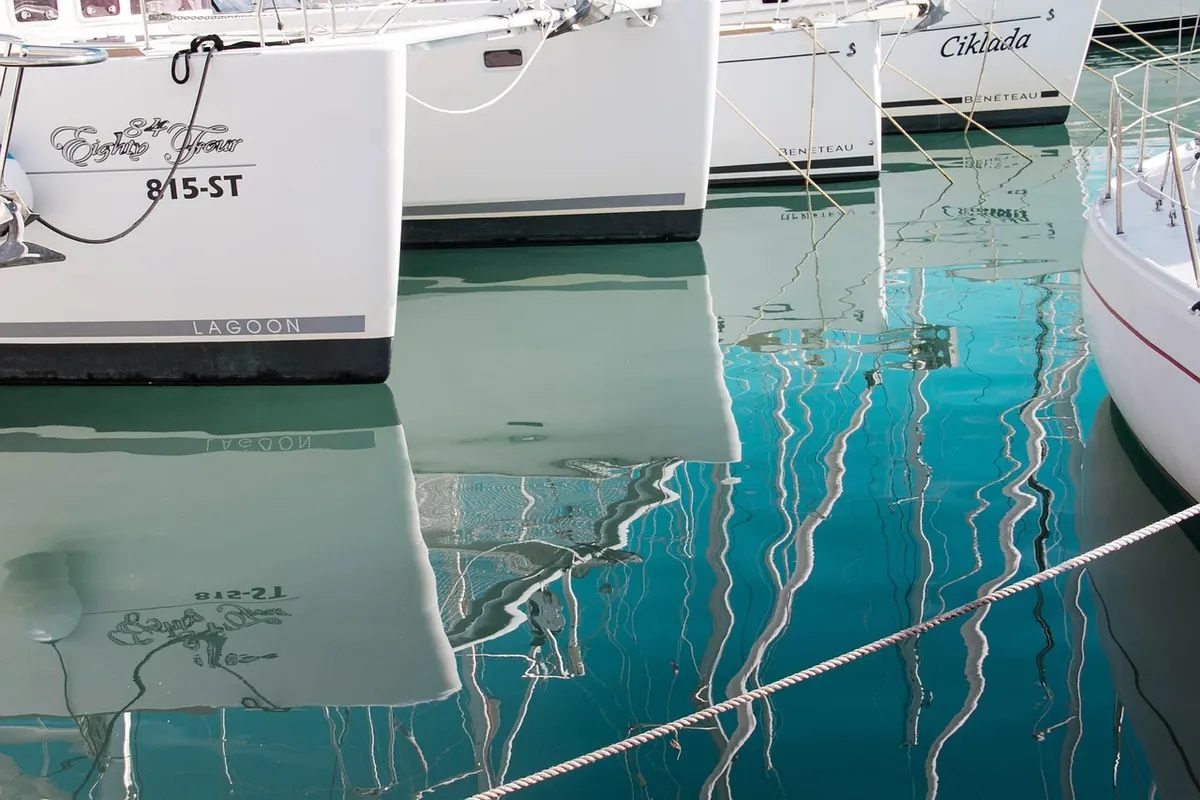
Photo: vpzotova / Pixabay